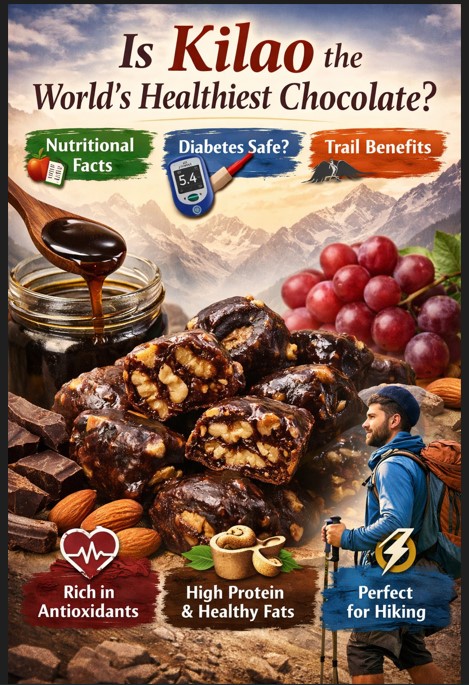
While picking a snack for a mountain walk, you hear a seller pitch Kilao as a healthy chocolate made from grapes and nuts. Appealing, particularly if you’re keeping an eye on your blood sugar. Yet answering “Is Kilao the World’s Healthiest Chocolate? Nutritional Facts, Diabetes Safety, and Trail Benefits” calls for a more careful examination than the seller’s claims provide.
Kilao cannot reasonably be called the world’s healthiest chocolate: there is no established ranking supporting that claim, and traditional versions generally contain no cocoa. This grape-and-nut snack can provide useful hiking energy, but it contains sugar. People with diabetes need to consider its total carbohydrate content, portion size, and individual glucose response.
Is Kilao the World’s Healthiest Chocolate?
“World’s healthiest chocolate” is a promotional description, not a demonstrated nutritional finding. Kilao is better understood as a traditional sweet, energy-dense food associated with northern Pakistan.
Common versions combine walnuts or almonds with a thickened grape preparation, often using wheat flour to help form the coating. Recipes and spellings vary between communities and sellers. Some versions may also contain dried fruit, sesame seeds, or spices.
The distinction from chocolate matters. A product without cocoa does not automatically provide the cocoa flavanols discussed in research on dark chocolate. Nor can findings about dark chocolate and diabetes be transferred to Kilao.
Still, the snack has a practical purpose. Nuts supply fat and some protein, while the grape coating supplies carbohydrates. That combination can be useful when you need portable food during a long walk. Whether it fits your everyday diet depends on the recipe and how much you eat, rather than its traditional origins alone.
Read the Ingredients Before the Claims
Kilao’s nutritional profile comes mainly from the proportions of grape syrup, nuts, and flour. A thick, sweet coating and a nut-heavy piece can have substantially different carbohydrate and fat contents.
Grape syrup supplies concentrated sweetness
Grape syrup or molasses is made by concentrating grape juice, commonly through heating. Removing water concentrates the sugars, including glucose and fructose. Depending on processing, some minerals and grape-derived plant compounds may remain, but their amounts are variable.
Those traces do not cancel the sugar. Concentrated grape syrup is also nutritionally different from whole grapes, which provide water and the structure of the intact fruit.
A recipe made without table sugar can still contain plenty of sugar from syrup. On some food labels, syrup used to sweeten a product is counted as added sugar, even when the packaging calls it natural. “No refined sugar” and “sugar-free” are not interchangeable claims.
Nuts contribute more than crunch
Walnuts provide unsaturated fats, fiber, plant protein, and the plant omega-3 fat alpha-linolenic acid, or ALA. Plain walnuts contain approximately 15 grams of protein per 100 grams. That figure describes the nuts themselves, not a finished piece of Kilao.
Almonds contribute vitamin E, magnesium, fiber, and approximately 21 grams of protein per 100 grams of plain nuts. Again, adding a grape-and-flour coating changes the nutritional values per 100 grams of the finished snack.
Either nut can make Kilao more filling, but neither turns a sweet coating into a high-protein food. If protein is your main goal, check the finished product’s label rather than borrowing numbers from its ingredients.
“Desi flour” needs clarification
Wheat flour contributes starch and helps thicken the grape mixture. Whole-wheat flour also supplies more fiber than refined wheat flour, but the word “desi” does not establish that a flour is whole grain.
Ask which flour the maker uses. This is especially relevant if you have celiac disease, because traditional wheat-containing Kilao is not gluten-free. Walnuts and almonds also make it unsuitable for anyone allergic to the relevant tree nuts.
What Can You Know Per 100 Grams?
There is no single reliable nutritional value per 100 grams that applies to every Kilao recipe. Use a label for the actual product or a recipe-based calculation; an unattributed internet estimate is not enough for carbohydrate counting.
The unknowns are substantial: how much syrup was used, how concentrated it became, the amount of flour, the proportion of nuts, and the final moisture content. A softer product with more water will have different values per 100 grams from a drier version of the same recipe.
For packaged Kilao, look for:
- Serving weight in grams, rather than only “one piece.”
- Total carbohydrate, which includes sugars and starch.
- Total sugars and, where listed, added sugars.
- Calories, fat, protein, and fiber for that same serving.
- An ingredient list and clear allergen information.
Minerals such as potassium, magnesium, and iron may be present, along with vitamin E in almond-containing recipes. However, without product-specific analysis, there is no sound basis for calling Kilao a major source of any particular micronutrient or antioxidant.
Turn label numbers into your portion
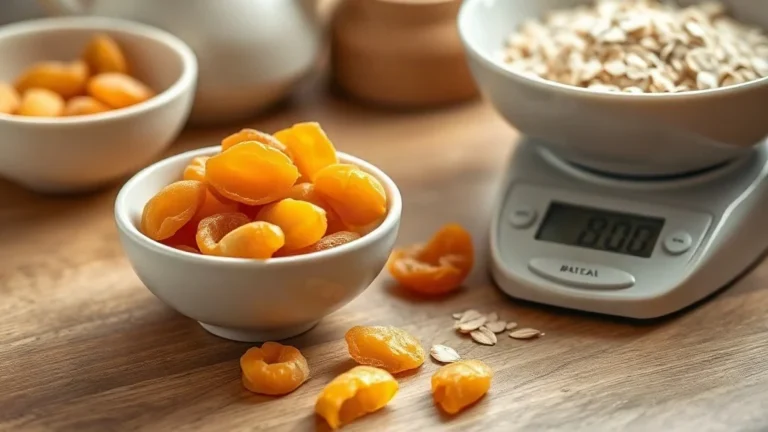
Multiply the per-100-gram value by your portion weight, then divide by 100. A kitchen scale makes this much more useful than guessing from the length of a piece.
For example, if a particular label lists 50 grams of carbohydrate and 450 calories per 100 grams, a 20-gram portion provides 10 grams of carbohydrate and 90 calories. These are illustrative label values, not verified nutritional figures for Kilao.
For homemade batches, calculate nutrients from the weighed ingredients and divide by the finished batch weight. Weighing before cooking alone can mislead you because water evaporates during preparation. A recipe calculation is still an estimate, but it is more informative than applying another seller’s numbers.
Can Someone With Diabetes Eat Kilao?
Some people with diabetes can fit a measured portion of Kilao into their eating plan, but it is not automatically diabetes-safe. The relevant factors are total carbohydrate, medication, activity, and the person’s glucose response.
Natural fructose and glucose still count as sugars. Wheat flour adds carbohydrate too, so looking only at “sugar grams” can underestimate the amount you need to account for.
The fat, fiber, and protein in nuts may slow digestion and change the timing of the glucose rise. They do not reliably prevent a spike. With mixed foods, a rise can sometimes occur later than expected, particularly when the portion contains substantial fat.
Use a measured, repeatable approach
- Choose a product with usable nutrition information, especially if you count carbohydrates or use mealtime insulin.
- Weigh the portion and include its carbohydrates in your meal or snack plan.
- If you monitor glucose, follow your clinician’s guidance for checking your response. A continuous glucose monitor may reveal a later rise that one check misses.
- Assess the snack under ordinary conditions first, rather than testing an unfamiliar food during a strenuous remote trek.
- Discuss recurring high readings or medication questions with your diabetes care team instead of changing doses based on a “healthy snack” claim.
A small portion alongside a meal may be easier to account for than repeatedly nibbling from a bag. There is no universal safe serving, however, and a 20-gram piece should not be treated as a medical recommendation.
Kilao is also a poor first choice for treating low blood glucose because its fat can slow carbohydrate absorption. Carry the fast-acting carbohydrate recommended in your diabetes plan, such as measured glucose tablets. Exercise-related lows require preparation, not reliance on whichever snack happens to be available.
Where Kilao Helps on the Trail
Kilao’s main trail benefit is compact food energy from carbohydrates and nut fats. It can add variety to a hiking food supply, but it does not prevent altitude sickness or replace water, meals, or an appropriate fueling plan.
For a leisurely walk, a small piece may be a convenient snack. During a demanding ascent, however, a fatty, chewy food may feel heavy or be difficult to eat. Your stomach’s tolerance matters as much as the calorie count.
Carbohydrate helps fuel sustained activity, while calorie-dense nuts make it easier to carry energy without a large volume of food. That explains the appeal of grape-and-nut combinations. It does not establish that Kilao prevents fatigue more effectively than other suitable foods.
Pack it for actual walking conditions
- Cut and weigh portions before leaving so you can eat them without unpacking a large piece.
- Use a clean, sealed container or food-safe wrapping to keep the coating away from dirt and moisture.
- Try the snack on a short local walk before relying on it during a long trek.
- Carry easier-to-digest carbohydrate options as well, especially for harder sections or when your appetite drops.
- Keep water accessible. A dense, chewy snack can be uncomfortable to eat with a dry mouth.
- If you use insulin or medication that can cause hypoglycemia, carry separate low-glucose treatment and follow your activity plan.
Do not assume “traditional” means shelf-stable indefinitely. Drying and concentrated sugar can help preservation, but storage safety depends on moisture, preparation, packaging, and temperature. Follow the maker’s instructions; discard products with mold, signs of spoilage, or rancid-smelling nuts.
Likewise, “organic” requires evidence about how the ingredients were produced. A short ingredient list or mountain origin does not establish organic certification.
Questions to Ask Before Buying Kilao
The most useful buying information is the recipe, portion weight, nutrition label, and storage guidance. These details tell you more than claims about purity or being the healthiest snack.
Ask the seller which nuts and flour are used, whether any other sweeteners are added, and whether the carbohydrate figures describe the finished product. If the product is unpackaged, ask when it was made and how it should be stored.
For everyday snacking, start by deciding what you need: a sweet treat, extra calories, or a protein-rich food. Kilao can serve the first two purposes, depending on the recipe. It should not automatically replace a protein-focused snack or be eaten freely because its ingredients sound wholesome.
Frequently Asked Questions
These answers address practical questions about Kilao that ingredient lists and health claims often leave unresolved.
Is Kilao actually chocolate?
Traditional grape-and-nut Kilao generally contains no cocoa, so it is not chocolate in the usual ingredient-based sense. Check the recipe, since a commercial variation could add cocoa or chocolate.
Is Kilao sugar-free if no white sugar is added?
No. Grape syrup contains sugars even when the recipe has no white sugar. Flour also adds carbohydrate, so people managing diabetes should check total carbohydrate rather than relying on a no-refined-sugar claim.
How much Kilao should I take hiking?
There is no standard amount for every hike. Base the quantity on the product’s nutrition label, the walk’s length and difficulty, your other food, and your tolerance. Pack weighed portions and bring other foods rather than making Kilao your only fuel.
Can I eat Kilao if I have celiac disease?
Traditional versions containing wheat flour are unsuitable for people with celiac disease. Choose only a product with verified gluten-free ingredients and appropriate controls against cross-contact; a grape-and-nut description alone is not enough.
Does Kilao need refrigeration?
Storage requirements depend on the recipe’s moisture content and how the product was prepared and packaged. Follow the producer’s instructions. For homemade Kilao without validated storage guidance, do not assume that sugar concentration makes it safe for prolonged room-temperature storage.
Further reading: Dark chocolate: An overview of its biological activity … – PMC